Block-paved driveways on a foundation designed for the weight of a car, from groundwork to edging
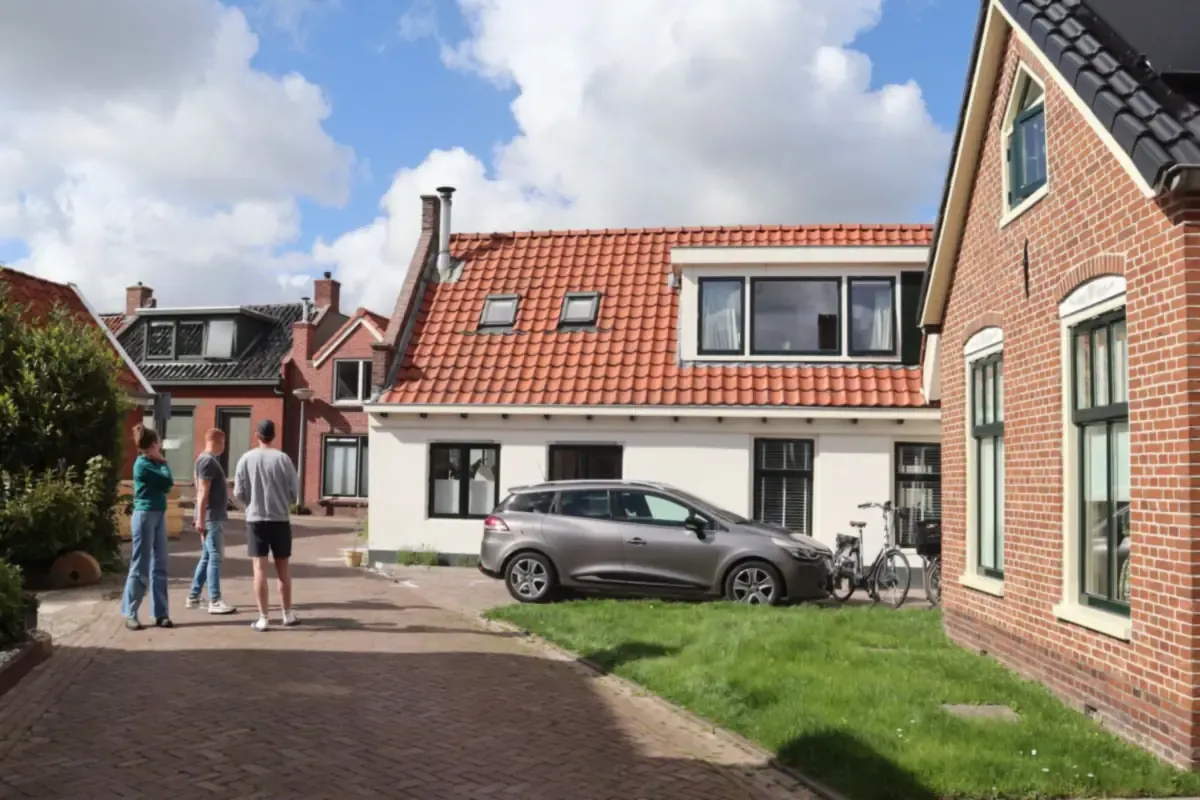
A driveway in Rotterdam, or in the towns around it, has a much harder life than a garden path. Even a small car weighs well over a tonne, and it stands on the same four spots day after day. Lay the drive on a thin layer of sand and before long you'll see two tracks and loose edges. We dig deeper, put in a compacted sub-base, bed the edging kerbs in concrete and lay thicker pavers in a pattern that won't creep. On the soft clay and peat of the Rotterdam polders, none of that is optional.
Get a driveway quote
- 1Tell us about your drive
- 2We measure up and check the ground
- 3You get a fixed price
Call us, or email a few lines on what needs doing and where you live. Photos of the roof, gutter or paving help.
- Free quote
- Price agreed in writing
- Roof and ground
- Painting & cleaning
- English & Nederlands
What matters
Why a driveway in Rotterdam needs more than sand and bricks
Whether a drive stays level for years or shows wheel ruts after one winter comes down almost entirely to the layers you never see.
A real sub-base
Under the sand goes a layer of crushed hardcore or recycled aggregate, compacted in stages. It spreads the car's weight, so the pavers don't get pressed down into soft ground.
Thicker pavers
For drives we use 8 cm pavers rather than the thinner stones that are fine on a path. They crack less easily and stay where they've been put.
Edges that stay put
The edging kerbs (opsluitbanden) are set on a haunch of concrete. Without it, a kerb gets pushed outwards every time a wheel rolls over it, and the pavers next to it follow.
A pattern that doesn't creep
Herringbone locks the pavers together, even when you turn the wheel while the car is standing still. Lay them in straight rows and they tend to creep along the line.
Water away from the garage
We lay the drive with a fall towards the street, a drain or the garden. Rain runs away from your front door and garage, even when an autumn storm drives it in sideways off the North Sea, and there are fewer puddles to freeze over in winter.
Planned around the rest
If scaffolding or a skip is coming for roof work, we lay the drive afterwards. One firm handles roof, walls and driveway, so a brand-new drive isn't crushed by a lorry the following week.
Edging and finish
Get the edges right and the rest follows
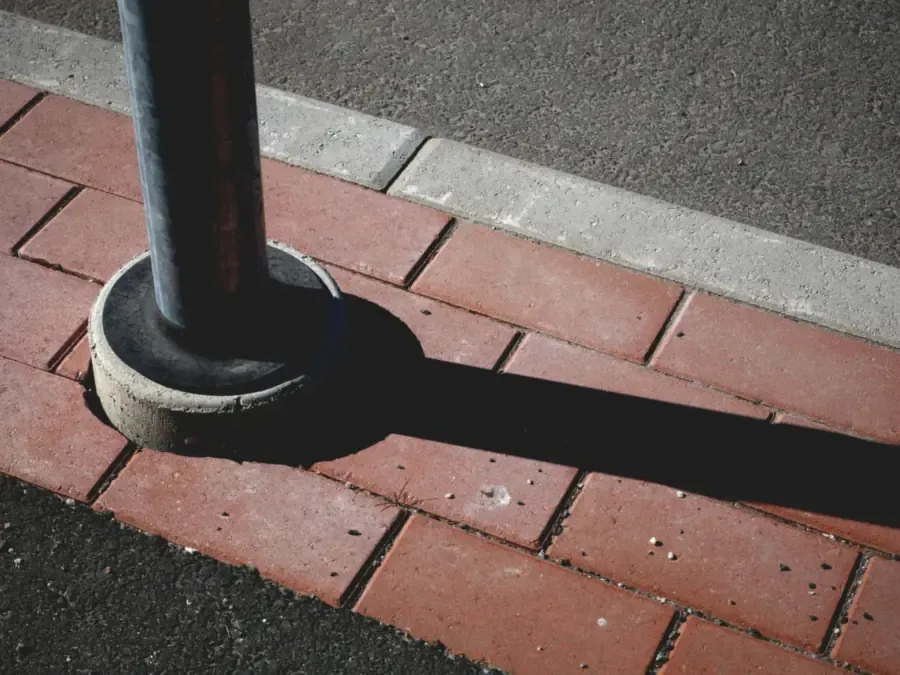
Grey or charcoal edging kerbs hold the paving in place and give a clean line against the lawn or a border. Where the drive meets the pavement, a strip of pavers in a different colour or a band of cobbles shows where your own ground ends. Want a bollard or a low kerb so nobody cuts across the grass? We can work that into the same design.
- Concrete or fired clay pavers, 8 cm thick
- Edging kerbs bedded on a concrete haunch
- Herringbone bond for vehicle traffic
- A contrasting strip where the drive meets the pavement
- Bollards, low kerbs or a gravel margin along the side
How we work
How a driveway goes in, in five steps
A drive needs more groundwork than a path, and sometimes a word with the council first. We sort that out early so the job doesn't stall halfway through.
- 01
Survey and ground check
We measure the drive, see how soft the ground is and work out where the water should go. We also talk through whether you'll need a new access onto the public road.
- 02
Quote and permission
The quote covers the sub-base, pavers, kerbs and soil removal. If a new crossing over the pavement is part of the plan, that end of the job waits until the gemeente (the council) has given its approval.
- 03
Digging out and sub-base
Before the digger starts we file a KLIC request with the Kadaster, the legally required search for buried cables and pipes. Then we dig out, lay the sub-base and compact it in layers.
- 04
Kerbs and sand bed
The edging kerbs go in at the right height on their concrete haunch. Then we spread paving sand, compact it and screed it to the fall we set out during the survey.
- 05
Laying, jointing and handover
We lay the pavers, cut the edge pieces, brush in jointing sand and compact the lot. At handover we walk the drive with you and tell you when you can park on it again.
- →
What next?
Send us a message about what needs doing. A quote costs you nothing.
Ask for a quote →
Questions
Driveways in Rotterdam: your questions answered
Do I need a permit for a new driveway?
Not usually for the drive itself, on your own land. If you want a new uitweg, meaning a new place where you drive across the pavement or verge onto the public road, you will generally need permission from the gemeente, often in the form of an omgevingsvergunning (the Dutch environment and planning permit). The rules differ between councils, so Schiedam or Capelle may handle it differently from Rotterdam itself. Run the permit check on the government's Omgevingsloket site or ask your gemeente first.
What does the council look at for a new crossing?
That's set by your own gemeente's rules. Councils commonly consider road safety, how the street will look, and whether a public parking space or a patch of public green would be lost. If the crossing goes over a ditch, you may need the water board's approval as well. Around Rotterdam that's Delfland, Schieland en de Krimpenerwaard or Hollandse Delta, depending on where you live. It's worth checking before anything is built.
How deep does a driveway sub-base need to be?
It depends on the ground and on what will be parked there. On the soft clay and peat in and around Rotterdam we dig a good deal deeper for a drive than for a garden path, and we compact the sub-base in layers. During the survey we check how soft the ground is and spell out the full build-up in the quote.
Can you re-lay my existing driveway?
Yes. If there are ruts or the edges have come loose, we lift the pavers and look at what's underneath. If the sub-base is too thin we build it up before the pavers go back. Sound clay bricks can often be reused, and a broken kerb gets replaced with a new one on a concrete haunch.
When can I park on the drive again?
Block paving on a sand bed doesn't need to cure, so you can usually drive on it straight after handover. The exception is when we've just set the edging kerbs in fresh concrete: then we'll ask you to keep off the edges for a few days. We'll tell you exactly on the day, so you don't have to guess.
Service area
Driveways in and around Rotterdam
Hardly anyone in the city centre has a drive. You find them mostly at the detached and semi-detached houses in Hillegersberg, Kralingen and Nesselande. We also lay drives in Capelle aan den IJssel, Lansingerland and Barendrecht, and Schiedam is only a few minutes from our base in Spaanse Polder.
- Rotterdam
- Schiedam
- Vlaardingen
- Capelle a/d IJssel
- Krimpen a/d IJssel
- Barendrecht
- Ridderkerk
- Rhoon
- Berkel en Rodenrijs
- Bergschenhoek
- Maassluis
- Spijkenisse
Had enough of ruts in your drive?
Ring or email us to book a visit. We'll measure up, check the ground and send you a quote that spells out the full build-up.